Blog / Wrongful Death

Can You Sue for Pain and Suffering in a Wrongful Death Case?

In North Carolina, wrongful death claims allow you to recover specific damages when a person's death is caused by the wrongful act, neglect, or default of another. A wrongful death attorney can help you with this process, including discovering everything that can be added to the claim, such as pain and suffering.

Can You Sue for Pain and Suffering in a North Carolina Wrongful Death Case?

In short, yes, but it's important to understand that you're suing for the pain and suffering of the person who died. The term "pain and suffering" is often used informally among the general public to refer to all non-economic damages in any personal injury claim, but "pain and suffering" is a specific concept. When the deceased's family recovers compensation for wrongful death, they can claim non-economic losses such as loss of companionship, society and guidance, or emotional distress stemming from the death. These may somewhat overlap with broader concepts of pain and suffering, but technically the "pain and suffering" claim is from the deceased's point of view.

What Else Can Be Recovered in a Wrongful Death Lawsuit?

Other recoverable damages in these cases typically include medical expenses related to the injury or illness that caused the death (if there were any), funeral and burial costs, and lost income or services from the decedent. There is generally no cap on pain and suffering damages in North Carolina wrongful death cases, unless the claim involves medical malpractice.

What's the Time Limit for Bringing a Claim?

The statute of limitations for filing a wrongful death claim is typically two years from the date of death, with some very rare exceptions. Always assume there are only two years and talk to an attorney as soon as possible.

Who Can Bring a Claim?

Only the personal representative of the decedent's estate, sometimes called an executor or administrator, can bring a wrongful death claim. Family members cannot bring a claim, though if there is no executor and the deceased doesn't have an estate to enter probate, the family can petition the court to appoint a representative to bring the claim.

Who Can Benefit From the Claim? 

When the wrongful death claim is successful, the money goes to the decedent's estate first and is used to reimburse the estate for the cost of pursuing the claim. Then, it may be used to pay attorney fees. Most of the rest is distributed to family according to the intestacy laws of North Carolina, except for compensation to the estate for funeral, burial, and reasonable final medical expenses. Money is distributed to spouses and children first. If there's no spouse, the children split the award. If there's no spouse or children, then grandchildren, parents, siblings, grandparents, and aunts and uncles may all get some of the claim, depending on the family circumstances.

Talk to a Wrongful Death Attorney

For help with a wrongful death claim, call David and Associates Injury Attorneys in Wilmington, Jacksonville, Supply, Whiteville, Wallace, or Clinton, NC today for help.

Posted in:

Recommended Posts

Attorney reviewing legal documents with a client during a legal consultation.

How Does North Carolina’s Negligence Laws Affect Your Case?

If you've been in a construction accident, North Carolina negligence laws impact only one of the two paths that you might take to get compensation. Here's what you need to know. Bringing a Claim After a Construction Accident If your claim is against your own employer, you typically can't bring a claim for ordinary personal injury or negligence. If you're bringing a claim against someone else, however, negligence is the whole case. If you have even a small share of blame, your case can be derailed. Workers' Comp Most job-site injuries are compensated for from workers' compensation. Under the North Carolina Workers' Compensation Act, an employee hurt while doing their job can get the medical care they need and a portion of lost wages without having to prove that anyone was careless or defend themselves from loss if they were at fault. The trade-off is exclusivity. In exchange for that no-fault coverage, the worker generally isn't allowed to sue either their employer or a co-worker who was acting in the course of their job. This remains true even if the site was unsafe. If the site was unsafe, talk to your lawyer about bringing a different kind of claim with the Industrial Commission. Lawsuits Against Your Employer/Coworker Two narrow exceptions can allow you to open up a suit against an employer or a co-worker. First, if your employer intentionally engaged in misconduct knowing it was substantially likely to cause serious injury or death, and that misconduct in fact caused th accident, you can bring a claim. You can also sue a co-employee for willful, wanton, and reckless negligence. Against a Third Party Construction sites often host workers from various employers. The entity responsible for your accident might not be your own company at all, but a general contractor, another subcontractor, the property owner, a crane or scaffold company, or the maker of a defective tool. You have the right to pursue those outside parties even while a workers' compensation claim is open. How North Carolina Negligence Laws Impact Your Claim Our state is one of only a few that still follow pure contributory negligence. This means if the defense can prove the worker was negligent and that negligence was a proximate cause of the injury, the worker can't recover any compensation at all. It doesn't matter how small the contribution was: even a worker who is 1% at fault will be barred from bringing a claim under these rules. The good news is that contributory negligence does not cut off any workers' compensation claims. The practical effect of all this is that a construction worker can often collect compensation under workers' comp coverage from their employer's carrier and, at the same time, pursue a negligence case against someone else on the site. The compensation claim will survive the worker's own mistake, if there was one, and ensure that some compensation is paid out, regardless of fault. For more information on what to expect in your construction accident case, call David & Associates in Wilmington, Clinton, Supply, Jacksonville, Wallace, or Whiteville, NC today to request a free consultation.

Legal professional reviewing case documents, illustrating the process of evaluating financial losses and compensation in a North Carolina wrongful death claim.

How Do You Calculate Damages in a Fatal Accident Case?

How do you calculate damages in a fatal accident cases? Here in North Carolina, a wrongful death lawsuit after a car accident has to be brought by the representative of the deceased's estate; but what's recovered is for the use of the surviving family. It's important to work with an attorney to be sure you've properly calculated everything and bring a strong claim. How Do You Calculate Damages in a Fatal Accident Case? The representative of the estate has the duty to bring a claim against the person or entity whose wrongful act, neglect, or default caused the death and would have given the decedent a personal injury claim if they had survived. In general, the damages available to be recovered are: Any expenses for care, treatment, and hospitalization for the injury that caused death Compensation for the decedent's pain and suffering up until the point of death All reasonable funeral expenses "Value" of the decedent to dependents, including their expected net income, services, protection, care, and assistance Compensation for the loss of the decedent's society, companionship, comfort, guidance, and advice Punitive damages, if they apply under ordinary personal injury law or if the death was caused deliberately Calculating the Damages There is no fixed formula for this, and the final number will depend on the evidence and the skill of your attorney to gather that evidence and use it convincingly. Adding Up Known Losses This is the easy part, because it involves gathering bills and receipts for medical care, funeral expenses, and any personal property loss from the accident. Pain and Suffering This is trickier, and the amount will depend on how long the decedent suffered before their death. For an accident where death was nearly instant, the number will be a lot lower than if the decedent spent several weeks in the hospital before finally succumbing to injuries. Lost Income and Services Here's where things can become very difficult to calculate, and it's important to have a lawyer's advice on what's fair and reasonable. For example, when considering net income, you must first find the decedent's current salary and then extrapolate out how long they could have been expected to keep working and what raises they could have expected over a lifetime. From that, it would also be reasonable to assume that the decedent would have spent some money on personal things that did not benefit their family, and that should be subtracted from the total. Punitive Damages Punitive damages are fairly rare, and it does require clear and convincing evidence to prove that the defendant is liable for these. A lawyer can tell you how likely it is that they will be awarded as well as what a jury is likely to consider fair. Get Help With a Car Accident Wrongful Death Claim Calculating damages and proving every part of the claim with the right evidence can be tricky. For help with a claim, contact David and Associates in Wilmington for a free consultation. We also have offices in Clinton, Supply, Jacksonville, Wallace, and Whiteville.

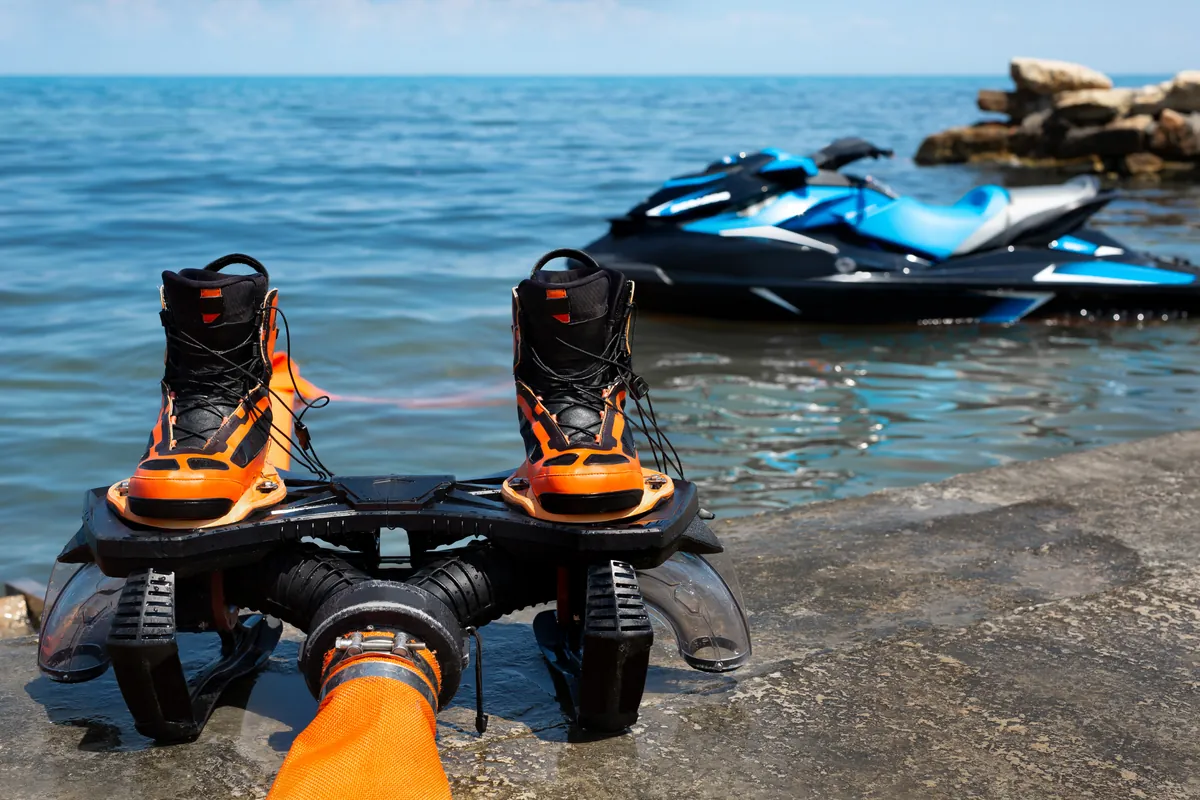
Orange wakeboarding boots and a personal watercraft near the shoreline, illustrating recreational watercraft activities

What Are the Key Differences in Liability for Watercraft Accidents?

Personal injury recovery can happen after an accident on the water here in North Carolina, but watercraft incident liability differences dictate how you pursue a claim. Talk to a lawyer with experience in watercraft incidents to make sure you know your rights and are pursuing them appropriately. Personal Injury Rules and Watercraft Incident Liability Differences Navigable Waters Navigable waters in our state's laws include the Atlantic Ocean off the North Carolina coast, the Intracoastal Waterway, major rivers such as the Cape Fear, and other waterways used or capable of use in interstate commerce. On those waters, you're not dealing just with state laws, and sometimes not with state laws at all, but are in federal admiralty jurisdiction. If the incident occurs on a non-navigable pond or small private lake with no connection to interstate commerce, North Carolina state law controls everything. Under state law, you must prove ordinary negligence, and North Carolina follows a contributory negligence rule, so if you bear any degree of fault at all, you likely can't recover anything. Under general maritime law, the standard is pure comparative fault, so you can recover, but your recovery is reduced by your percentage of responsibility. Things can get very complicated quickly, and it's best to speak with a legal professional to sort everything out. Limitation of Liability Watercraft vessel owners like to invoke the Limitation of Liability Act whenever possible. This is a statute that lets an owner petition a federal court to cap their total liability at the post-incident value of the vessel, plus pending freight. If their boat is destroyed or left with little residual value, the cap can be near zero, and, unfortunately, many recreational craft remain eligible for the limitation. You must challenge the petition very quickly if you want to keep the full value of your claim available, so talk to a lawyer as quickly as you can. Insurance Issues North Carolina does not require liability insurance for recreational boats, so many owners carry none, and homeowners policies routinely exclude watercraft liability above a certain (small) size or very small horsepower limits. When the at-fault operator has no coverage, you may face an uninsured defendant whose only reachable asset is the damaged vessel itself. Duty of Care Inland Navigation Rules and the International Regulations for Preventing Collisions at Sea determine who has a duty of care and under what circumstance. Generally speaking, vessel operators must maintain a proper lookout by sight and hearing, proceed at a safe speed, and take early action to avoid collision. Failure to keep a lookout, operating under the influence, excessive speed in restricted visibility, or overloading a boat beyond the capacity plate limits can establish negligence per se. Witness statements, Coast Guard or Wildlife Resources Commission reports, and any available electronic data, such as GPS tracks or engine diagnostics, can all show those violations. Talk to an Experience Attorney Today If you have been involved in a watercraft incident, contact David & Associates, Injury Attorneys right away for a free consultation. Our attorneys have more than 136 years of combined experience helping injured people throughout eastern North Carolina, and we serve clients in Wilmington, Clinton, Supply, Whiteville, Wallace, and Jacksonville and all surrounding areas.