
Legal Advice Blog: Legal Advice, Case Insights, & Local Law Information

All Car Accidents Workers' Compensation Truck Accidents Catastrophic Injuries Motorcycle Accidents Personal Injury Workplace Injuries Distracted Driving Accidents Drunk Driving Accidents Construction Accidents Firm News Brain Injuries Spine Injuries Pedestrian Accidents Blog boating accidents David and Associates Injury Attorneys Service Negligence Watercraft Accidents Wrongful Death
Attorney reviewing legal documents with a client during a legal consultation.
in Blog

How Does North Carolina’s Negligence Laws Affect Your Case?

If you've been in a construction accident, North Carolina negligence laws impact only one of the two paths that you might take to get compensation. Here's what you need to know. Bringing a Claim After a Construction Accident If your claim is against your own employer, you typically can't bring a claim for ordinary personal injury or negligence. If you're bringing a claim against someone else, however, negligence is the whole case. If you have even a small share of blame, your case can be derailed. Workers' Comp Most job-site injuries are compensated for from workers' compensation. Under the North Carolina Workers' Compensation Act, an employee hurt while doing their job can get the medical care they need and a portion of lost wages without having to prove that anyone was careless or defend themselves from loss if they were at fault. The trade-off is exclusivity. In exchange for that no-fault coverage, the worker generally isn't allowed to sue either their employer or a co-worker who was acting in the course of their job. This remains true even if the site was unsafe. If the site was unsafe, talk to your lawyer about bringing a different kind of claim with the Industrial Commission. Lawsuits Against Your Employer/Coworker Two narrow exceptions can allow you to open up a suit against an employer or a co-worker. First, if your employer intentionally engaged in misconduct knowing it was substantially likely to cause serious injury or death, and that misconduct in fact caused th accident, you can bring a claim. You can also sue a co-employee for willful, wanton, and reckless negligence. Against a Third Party Construction sites often host workers from various employers. The entity responsible for your accident might not be your own company at all, but a general contractor, another subcontractor, the property owner, a crane or scaffold company, or the maker of a defective tool. You have the right to pursue those outside parties even while a workers' compensation claim is open. How North Carolina Negligence Laws Impact Your Claim Our state is one of only a few that still follow pure contributory negligence. This means if the defense can prove the worker was negligent and that negligence was a proximate cause of the injury, the worker can't recover any compensation at all. It doesn't matter how small the contribution was: even a worker who is 1% at fault will be barred from bringing a claim under these rules. The good news is that contributory negligence does not cut off any workers' compensation claims. The practical effect of all this is that a construction worker can often collect compensation under workers' comp coverage from their employer's carrier and, at the same time, pursue a negligence case against someone else on the site. The compensation claim will survive the worker's own mistake, if there was one, and ensure that some compensation is paid out, regardless of fault. For more information on what to expect in your construction accident case, call David & Associates in Wilmington, Clinton, Supply, Jacksonville, Wallace, or Whiteville, NC today to request a free consultation.

Read More
Legal professional reviewing case documents, illustrating the process of evaluating financial losses and compensation in a North Carolina wrongful death claim.

How Do You Calculate Damages in a Fatal Accident Case?

How do you calculate damages in a fatal accident cases? Here in North Carolina, a wrongful death lawsuit after a car accident has to be brought by the representative of the deceased's estate; but what's recovered is for the use of the surviving family. It's important to work with an attorney to be sure you've properly calculated everything and bring a strong claim. How Do You Calculate Damages in a Fatal Accident Case? The representative of the estate has the duty to bring a claim against the person or entity whose wrongful act, neglect, or default caused the death and would have given the decedent a personal injury claim if they had survived. In general, the damages available to be recovered are: Any expenses for care, treatment, and hospitalization for the injury that caused death Compensation for the decedent's pain and suffering up until the point of death All reasonable funeral expenses "Value" of the decedent to dependents, including their expected net income, services, protection, care, and assistance Compensation for the loss of the decedent's society, companionship, comfort, guidance, and advice Punitive damages, if they apply under ordinary personal injury law or if the death was caused deliberately Calculating the Damages There is no fixed formula for this, and the final number will depend on the evidence and the skill of your attorney to gather that evidence and use it convincingly. Adding Up Known Losses This is the easy part, because it involves gathering bills and receipts for medical care, funeral expenses, and any personal property loss from the accident. Pain and Suffering This is trickier, and the amount will depend on how long the decedent suffered before their death. For an accident where death was nearly instant, the number will be a lot lower than if the decedent spent several weeks in the hospital before finally succumbing to injuries. Lost Income and Services Here's where things can become very difficult to calculate, and it's important to have a lawyer's advice on what's fair and reasonable. For example, when considering net income, you must first find the decedent's current salary and then extrapolate out how long they could have been expected to keep working and what raises they could have expected over a lifetime. From that, it would also be reasonable to assume that the decedent would have spent some money on personal things that did not benefit their family, and that should be subtracted from the total. Punitive Damages Punitive damages are fairly rare, and it does require clear and convincing evidence to prove that the defendant is liable for these. A lawyer can tell you how likely it is that they will be awarded as well as what a jury is likely to consider fair. Get Help With a Car Accident Wrongful Death Claim Calculating damages and proving every part of the claim with the right evidence can be tricky. For help with a claim, contact David and Associates in Wilmington for a free consultation. We also have offices in Clinton, Supply, Jacksonville, Wallace, and Whiteville.

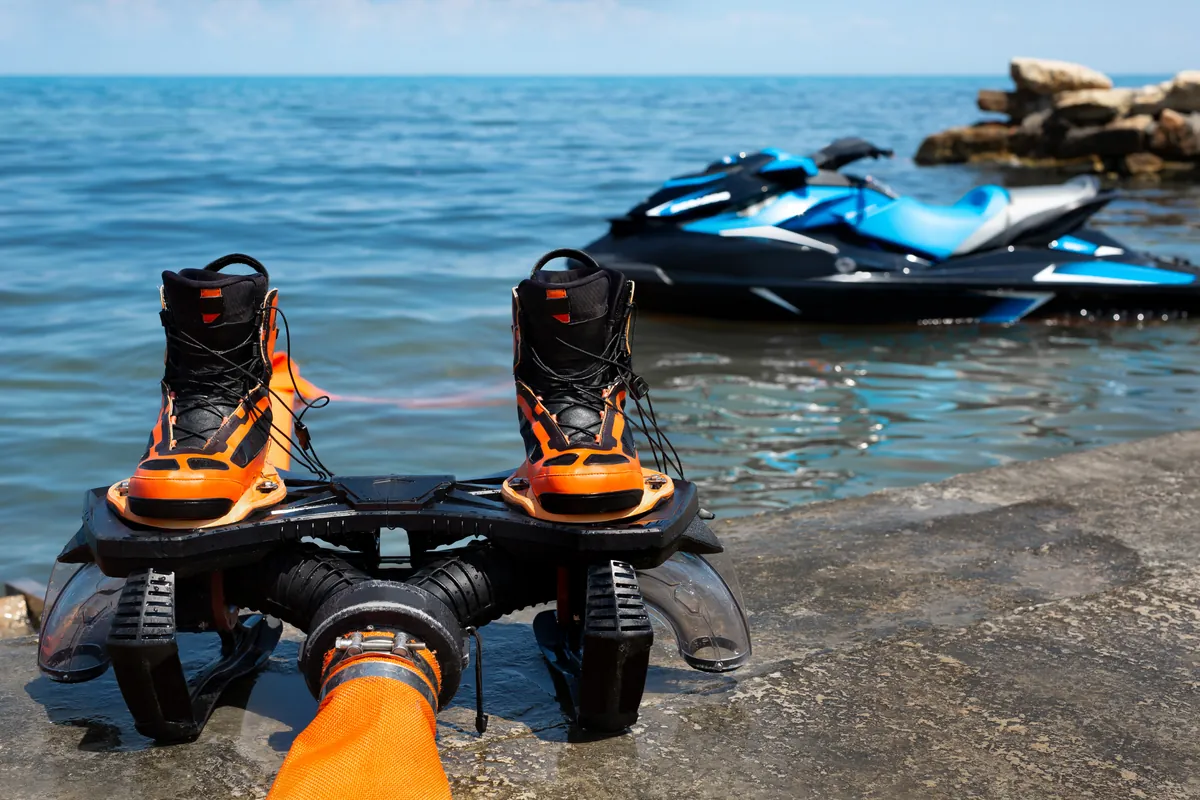
Orange wakeboarding boots and a personal watercraft near the shoreline, illustrating recreational watercraft activities

What Are the Key Differences in Liability for Watercraft Accidents?

Personal injury recovery can happen after an accident on the water here in North Carolina, but watercraft incident liability differences dictate how you pursue a claim. Talk to a lawyer with experience in watercraft incidents to make sure you know your rights and are pursuing them appropriately. Personal Injury Rules and Watercraft Incident Liability Differences Navigable Waters Navigable waters in our state's laws include the Atlantic Ocean off the North Carolina coast, the Intracoastal Waterway, major rivers such as the Cape Fear, and other waterways used or capable of use in interstate commerce. On those waters, you're not dealing just with state laws, and sometimes not with state laws at all, but are in federal admiralty jurisdiction. If the incident occurs on a non-navigable pond or small private lake with no connection to interstate commerce, North Carolina state law controls everything. Under state law, you must prove ordinary negligence, and North Carolina follows a contributory negligence rule, so if you bear any degree of fault at all, you likely can't recover anything. Under general maritime law, the standard is pure comparative fault, so you can recover, but your recovery is reduced by your percentage of responsibility. Things can get very complicated quickly, and it's best to speak with a legal professional to sort everything out. Limitation of Liability Watercraft vessel owners like to invoke the Limitation of Liability Act whenever possible. This is a statute that lets an owner petition a federal court to cap their total liability at the post-incident value of the vessel, plus pending freight. If their boat is destroyed or left with little residual value, the cap can be near zero, and, unfortunately, many recreational craft remain eligible for the limitation. You must challenge the petition very quickly if you want to keep the full value of your claim available, so talk to a lawyer as quickly as you can. Insurance Issues North Carolina does not require liability insurance for recreational boats, so many owners carry none, and homeowners policies routinely exclude watercraft liability above a certain (small) size or very small horsepower limits. When the at-fault operator has no coverage, you may face an uninsured defendant whose only reachable asset is the damaged vessel itself. Duty of Care Inland Navigation Rules and the International Regulations for Preventing Collisions at Sea determine who has a duty of care and under what circumstance. Generally speaking, vessel operators must maintain a proper lookout by sight and hearing, proceed at a safe speed, and take early action to avoid collision. Failure to keep a lookout, operating under the influence, excessive speed in restricted visibility, or overloading a boat beyond the capacity plate limits can establish negligence per se. Witness statements, Coast Guard or Wildlife Resources Commission reports, and any available electronic data, such as GPS tracks or engine diagnostics, can all show those violations. Talk to an Experience Attorney Today If you have been involved in a watercraft incident, contact David & Associates, Injury Attorneys right away for a free consultation. Our attorneys have more than 136 years of combined experience helping injured people throughout eastern North Carolina, and we serve clients in Wilmington, Clinton, Supply, Whiteville, Wallace, and Jacksonville and all surrounding areas.

How Can You Challenge an Insurance Company’s Lowball Offer?

If an insurance company has presented you with an offer that seems far below what you actually deserve, this is called a “lowball offer,” and it's a common tactic. Knowing how to respond effectively matters, and a lawyer with statewide experience here in North Carolina can make all the difference when you're challenging lowball insurance offers. Challenging Lowball Insurance Offers Why It Happens Insurance companies frequently start the claims process with a proposal that falls short. This is because their adjusters receive training that's focused on protecting the company they represent, not you. This leads them to minimize and devalue your figures. They may try offering an initial amount that's low to leave room for negotiation, or, in other cases, the tactic is to make you panic and believe that if you don't accept their offer, nothing else will be forthcoming. Practical Steps to Take 1. Talk to an Attorney with Statewide Experience The first concrete step to take is get a legal opinion. An experienced lawyer will have seen all this before and will know how to counter the insurer's tactics. An attorney can also give you a professional opinion on the true value of your claim and the strength of your case. 2. Ask for a Written Breakdown Your attorney's first move will likely be to ask the adjuster for a detailed written breakdown of how they reached their specific number. Adjusters sometimes share only a total over the phone or in a short letter and resist explaining which bills they accepted or denied. Putting the request in writing creates a documented exchange and often shows exactly what their evaluation overlooked. 3. Collect and Organize Evidence Strong documentation for these claims will have complete medical charts and bills that list every visit, procedure, prescription, and therapy session, itemized, along with the diagnostic codes. Depending on the nature of your case, you might also need: Employer letters or tax documents that confirm lost earnings and any reduction in work capacity Police report and any witness accounts Photographs of the scene and visible injuries A personal log describing how pain or restricted movement has changed your daily life 4. Making a Written Reply With the records assembled and treatment considerations in view, the next action is usually to send a written reply to the adjuster. It should restate what happened and how you were injured, then itemize each loss category with dollar totals drawn directly from the supporting documentation. It may also need to address any specific reasons the company gave for the lower amount and explain why the evidence does not support those reasons. 5. Negotiate After this initial exchange, there's often several rounds of negotiations. The key to success is to keep pushing the documented evidence, avoid emotional language, and never disclose your absolute bottom-line amount too soon. 6. Consider a Lawsuit If negotiations stall, you do have options, but you'll need an attorney by your side to pursue them. You have the right to file a lawsuit, and sometimes doing so is enough to show the insurer you mean business and get negotiations moving. But if not, your attorney can be prepared to take your case to court if that's the smart thing to do in your case. For help with your claim, visit David and Associates, Injury Attorneys in Wilmington, Clinton, Supply, Wallace, Jacksonville, Whiteville, and statewide for help.

What Evidence Should You Gather Right After Any Collision?

In the chaotic few minutes after cars crash, your actions are going to affect how clearly the events will be understood later. Evidence gathering after a collision in North Carolina should begin with protecting yourself and capturing what the scene shows. Evidence Gathering After a Collision in North Carolina Here's a quick rundown of what you'll be wanting to collect: Video and pictures Witness info Law enforcement info Driver, car, and insurance details Personal memories Video and Pictures As soon as you've taken care of things like calling the police or moving vehicles out of traffic, take pictures and a short video of the scene. Be sure to get images from several angles, and include where each vehicle ended up. Get any skid marks or debris on the road, traffic signs or signals nearby, and images that show the surrounding weather and lighting conditions. Get close-ups of the damage to every vehicle involved, the car license plates, and any visible injuries on people. Take these pics before anyone starts cleaning up or moving things around. A short video walkthrough can also help show spatial relationships between vehicles and the road layout. Witness Info Talk with anyone who saw what happened and ask them for their names and phone numbers. Ask if they'd be willing to give a statement to law enforcement or to a lawyer, and write down all your contacts in a notebook or an app on your phone right away. In the moment, you think you'll remember everything, but once the adrenaline fades, things tend to get a little hazy. Law Enforcement Info If law enforcement responds, ask for the officer's name and badge number along with the report number. Your police report is a valuable piece of evidence. This official document will record important facts and also if any citations were issued or statements taken. Request a copy once the report is available. Driver, Car, and Insurance Details Get all important information from the other driver or drivers (and give yours willingly). Make sure to get: Full names Addresses Phone numbers Driver's license numbers Insurance company and policy details All vehicle information (make, model, color, license #) Photograph their insurance card and license if they're ok with it allow it. If not, don't try to force it: just jot it all down. Personal Memories As soon as you're up to it after the accident, and while the details are fresh, jot down your own observations in writing. Include the exact time and location of the accident, the direction everyone was traveling as best you remember, what the weather, roads, and traffic were like, and anything else you noticed just before impact. The evidence you collect at the scene of an accident will make a big difference to the strength of your car accident claim, and a lawyer can help you use all of it well. Book a free consultation with us today at David & Associates. We serve all of NC from our offices in Wilmington, Jacksonville, Clinton, Supply, Wallace, and Whiteville.

How Long Do You Have to File a Car Accident Lawsuit?

If you've been in a crash, you likely have a lot going on right now, and it's easy to get distracted and let too much time pass. If you go too long, you could lose your right to bring a claim under North Carolina law. Talk to a car accident lawyer as soon as you can after the crash to make sure you don't miss the deadlines. Time Limit for Filing Your Lawsuit in North Carolina You generally have three years from the date of the car accident to file a lawsuit. The clock usually starts on the day the accident happened, though there are some rare exceptions. If you don't bring the claim in three years, you'll likely lose the right to seek compensation through the courts. Insurance companies know this rule well and may try to drag things out until time runs out, so it's important to talk to a lawyer as soon as you can and track everything right from the start. You don't want to realize too late that your chance to recover medical bills, lost wages, or other costs has slipped away. Exceptions and Changes to the Deadline Late Discovery of Injuries If your injuries weren't obvious right away, the deadline might start on the date when you discovered (or reasonably should have discovered) the issue. Courts look at what a typical person in your situation would have known to make this decision. However, most claims are still limited to a max of ten years from the last act that caused the problem. Wrongful Death If your case is wrongful death because you've lost a loved one in a car accident, you have just two years from the date of death to bring an action. Government Employee If the at-fault driver was a government employee or the crash involved a government vehicle, your timeline is the same, but there are extra rules and hoops to jump through. Your case will be heard by the Industrial Commission rather than go through the courts, and you have to start by filing an affidavit with them. Incapacitation If you were under eighteen at the time of the accident, the three-year clock generally doesn't start running until you turn eighteen. This is because children are considered "incapacitated" in terms of the law; they cannot bring a legal claim on their own. If you were incapacitated for a time – such as if you were in a coma after the accident – the clock usually doesn't start running until you regain capacity. Fraud and Flight Some situations pause or "toll" the statute of limitations. If the at-fault driver leaves the state to avoid responsibility, the clock will usually stop until they return. If they've committed fraud or concealed facts to avoid their responsibilities, then again, the clock will probably start running when the fraud is discovered. You'll need to talk with a lawyer about this, however, and how to prove it. Talk to a Car Accident Lawyer Today If you're dealing with a crash, don't wait until the last minute to figure out your next steps. Contact David and Associates Injury Attorneys in Wilmington, NC today to request a free consultation on your case. We also have offices in Clinton, Jacksonville, Supply, Wallace, and Whiteville.

What Happens if an Insurance Company Denies Your Injury Claim?

When an insurance company denies your injury claim, you may need help to protect what you're owed, and it's important to move quickly. A North Carolina personal injury lawyer can help you understand the process and protect your rights. What Happens if an Insurance Company Denies Your Injury Claim? Go Over the Denial Letter Step one is to look over your denial letter with your attorney and find out exactly why the insurer turned down the claim. This could be anything from questions about who caused the accident to whether your injuries connect directly to it, and in some cases it's primarily missing paperwork. Review Your Policy The next step is to carefully review your insurance policy or the at-fault driver's policy details and compare the denial reasons against the actual coverage language. You'll also need to check any deadlines mentioned in the policy for appeals or further action, because if you don't take action before that deadline, your denial can become permanent. Again, your lawyer can do this for you, and an experienced personal injury attorney will know how to read all the jargon. Gather and Organize Evidence Once you know what's wrong, you can start collecting everything that supports your appeal. This could be your medical records, police reports, witness statements, photos of an accident scene and your injuries, and repair estimates, among other things. The evidence you need will depend on precisely why your claim was denied. Filing an Internal Appeal Most policies require you to send a written appeal to them, first. Your lawyer can write an appeal letter that is factual, notes all the important details, and references exactly why their denial letter is incorrect in light of what the policy says. The insurer must review your appeal and send a written response. Many claims get approved or improved at this stage, especially once they see you have a lawyer helping you. Next Steps in North Carolina If the internal appeal fails, you can file a complaint with the North Carolina Department of Insurance. The department cannot force payment, but once you notify them, this often prompts an insurer to reconsider. Considering a Lawsuit If nothing else works, you may need to file a civil lawsuit against the at-fault party whose insurance is denying your claim. You're not able to bring a bad-faith claim against an insurance company directly unless it's your own insurer, so what you're doing is pushing the at-fault party to bring a claim against their insurer for bad faith. Talk to a Personal Injury Lawyer An experienced attorney knows how to review evidence, denial letters, and policies. Your lawyer can then handle all communication with the insurer, build a demand package, meet all deadlines, and deal with negotiations and a potential lawsuit. This means you avoid the guesswork and pressure of dealing with adjusters alone. If you have received a denial, contact David and Associates Injury Attorneys in Wilmington, Clinton, Supply, Jacksonville, Wallace, or Whiteville, NC today for a free consultation.

Is the Boating Operator Always Liable in Waterway Collisions?

Waterway collisions are often quite complex. Who bears responsibility for the damages and injuries that result? If you've been involved in such an incident in North Carolina, it's always wise to consult with a boating accident lawyer quickly. A lawyer can evaluate the circumstances of your collision and help you understand how fault will likely be assigned and how best to protect yourself. Waterway Collisions and Liability Is the boating operator always liable? No. Liability is always connected to negligence, so the question will be whether the operator failed to exercise reasonable care under the circumstances. Courts look at specific actions and whether those actions violated safety standards for vessel operation. You cannot assume automatic fault simply because you were at the helm. How Negligence Is Determined Finding an operator negligent requires showing that they did not take proper care, which is usually tied to having broken a specific rule, though, under some circumstances, an operator can technically be keeping all the rules but still be found to have been reckless. Some of the key waterway regulations that insurance companies and courts will look at are: Proper Lookout One fundamental principle of boating is that every vessel must at all times maintain a proper lookout by both sight and hearing. If an operator skips this basic step, even briefly, it can establish negligence. Proper Speed Another key rule requires boaters to go at a safe speed at all times. This can be somewhat subjective, but it's defined as a speed that takes into account visibility, waterway traffic density, how maneuverable the boat is, background lights at night, weather, and other conditions. Proper Collision Avoidance A boat is required to use all available means to determine if a risk of collision exists and take steps to avoid it. This may include watching compass bearings, listening for signals, and monitoring radar. If a risk exists, the operator must act immediately to: Alter course Slow down Stop Reverse engines An operator who takes the wrong action or who delays too long can face liability, but so can the other vessel if it fails to respond appropriately. A boating accident attorney will be able to help you sort ​out who was at fault. Proper Right-of-Way Right-of-way rules can also help in determining negligence. A vessel approaching from the starboard side generally has the right of way, meaning the other vessel must give way. Power-driven vessels must yield to sailing vessels in most cases, and vessels engaged in fishing have priority over others. Shares Negligence In practice, many waterway collisions, just like most car accidents, involve some degree of fault on both sides. One operator might have been speeding while the other failed to keep a lookout, for example. Federal law allows each party to make a claim for damages that reflects their own share of fault: however, North Carolina law is different. Liability Considerations in North Carolina Many waterways here qualify as navigable under federal standards, but for those that are entirely under North Carolina legal jurisdiction, pure contributary negligence rules apply. This means you cannot recover any damages if you are even 1% at fault. Talk to a Boating Accident Lawyer The best way to preserve your rights is to speak with an attorney as soon as possible. Contact David & Associates Injury Attorneys in Wilmington, Supply, Clinton, Jacksonville, Wallace, or Whiteville today.

Can You Sue for Pain and Suffering in a Wrongful Death Case?

In North Carolina, wrongful death claims allow you to recover specific damages when a person's death is caused by the wrongful act, neglect, or default of another. A wrongful death attorney can help you with this process, including discovering everything that can be added to the claim, such as pain and suffering. Can You Sue for Pain and Suffering in a North Carolina Wrongful Death Case? In short, yes, but it's important to understand that you're suing for the pain and suffering of the person who died. The term "pain and suffering" is often used informally among the general public to refer to all non-economic damages in any personal injury claim, but "pain and suffering" is a specific concept. When the deceased's family recovers compensation for wrongful death, they can claim non-economic losses such as loss of companionship, society and guidance, or emotional distress stemming from the death. These may somewhat overlap with broader concepts of pain and suffering, but technically the "pain and suffering" claim is from the deceased's point of view. What Else Can Be Recovered in a Wrongful Death Lawsuit? Other recoverable damages in these cases typically include medical expenses related to the injury or illness that caused the death (if there were any), funeral and burial costs, and lost income or services from the decedent. There is generally no cap on pain and suffering damages in North Carolina wrongful death cases, unless the claim involves medical malpractice. What's the Time Limit for Bringing a Claim? The statute of limitations for filing a wrongful death claim is typically two years from the date of death, with some very rare exceptions. Always assume there are only two years and talk to an attorney as soon as possible. Who Can Bring a Claim? Only the personal representative of the decedent's estate, sometimes called an executor or administrator, can bring a wrongful death claim. Family members cannot bring a claim, though if there is no executor and the deceased doesn't have an estate to enter probate, the family can petition the court to appoint a representative to bring the claim. Who Can Benefit From the Claim? When the wrongful death claim is successful, the money goes to the decedent's estate first and is used to reimburse the estate for the cost of pursuing the claim. Then, it may be used to pay attorney fees. Most of the rest is distributed to family according to the intestacy laws of North Carolina, except for compensation to the estate for funeral, burial, and reasonable final medical expenses. Money is distributed to spouses and children first. If there's no spouse, the children split the award. If there's no spouse or children, then grandchildren, parents, siblings, grandparents, and aunts and uncles may all get some of the claim, depending on the family circumstances. Talk to a Wrongful Death Attorney For help with a wrongful death claim, call David and Associates Injury Attorneys in Wilmington, Jacksonville, Supply, Whiteville, Wallace, or Clinton, NC today for help.

How Do Injury Lawyers Prove Fault in Complex Trucking Accidents?

Truck accidents often involve multiple parties, and there are federal rules that apply to trucks that make things a lot more complicated than with typical passenger car accidents. All this means it can be hard to pin down fault, and a truck accident attorney with experience here in North Carolina may be needed if you want to be sure of getting the full compensation you're owed after a crash. Why Trucking Accidents Are More Complex A semi-truck can weigh up to 80,000 pounds, so when it goes flying, injuries and property damage are usually serious. In addition, something that large is often going to injure multiple people and involve multiple vehicles in its crash. There could be a dozen or more drivers, pedestrians, and property owners who all need to make a claim in a worst-case scenario. Fault isn't always clear-cut, either, because it's not just the driver and the truck. In addition to the driver, you need to look at the trucking company and potentially the truck or truck parts manufacturers, a third-party mechanic service, or even a cargo loader. And finally, you need to be familiar with Federal Motor Carrier Safety Administration (FMCSA) rules about hours of service for drivers, maintenance, driver qualifications, and cargo securement in order to successfully bring a claim. If these rules weren't being followed, then the driver or the trucking company could bear some liability even if the driver didn't initially cause the accident. Say, for example, that a sedan makes an illegal U-turn in front of a truck, which causes the truck to brake and swerve to avoid it, and the truck crashes into you and two other vehicles. Is the sedan driver the only one at fault? Perhaps, but if your lawyer looks into it and finds that the truck's brakes weren't being maintained properly and the driver had violated hours of service rules, then you could potentially have a claim against the sedan driver, the truck driver, and the trucking company. Evidence Your Truck Accident Attorney Will Use to Establish Fault Your lawyer will need to move quickly to preserve evidence, as some of it tends to disappear fast. Key evidence will include the police reports and photos and video from the scene (if available). The photos have to be taken before the scene is cleaned up, and the video has to be secured before it gets overwritten. You'll also want witness statements, and witnesses tend to forget as time goes along. Maybe even more crucial will be the "black box" data and information from the truck's electronic logging devices (ELDs) that show speed, braking, acceleration, and hours driven. Video from inside the cab can show what the driver was doing, and driver logs and maintenance records may reveal FMCSA violations. But all this belongs to the trucking company, and they may "lose" or "accidentally erase" it, meaning your lawyer needs to get on the job fast. If you've been hurt in a truck accident, contact us at David & Associates right away so we can get started gathering and saving evidence to protect your rights. We serve the Supply, Wilmington, Clinton, Jacksonville, Wallace, and Whiteville areas.

Close-up of an adult’s hands gripping gray forearm crutches outdoors, with grass in the background, suggesting mobility support during recovery or injury.

When Should You Hire a Lawyer After a Slip-and-Fall Injury?

If you've been in a slip-and-fall and been injured, and if you slipped because of the negligence of someone else, you should definitely talk with a personal injury attorney here in North Carolina. This really always holds true but there are some situations where it's especially important to get legal help. When Should You Hire a North Carolina Personal Injury Attorney? 1. When You've Been Badly Injured If you've been badly injured and have mounting medical bills, it's time for a lawyer. It's tough enough to deal with injuries and recovery on your own; if you're also trying to bring a legal claim and jump through all the required hoops while negotiating with an insurance company, it can be enough to make you give up. Your medical bills are going to mount quickly, and you may also be unable to work during this time and losing income. A lawyer can take over the frustrating legal aspects of your case and help you figure out how to cover medical bills while you wait, so you can concentrate on getting better. 2. When the Negligent Party Is Denying Responsibility Unfortunately, this happens more often than you might think. The property owner, the manager of a store, or the insurance company covering the store may all try to deny responsibility for your losses. Common claims include accusing you of being in an unauthorized area and thus being a trespasser, claiming that there were warning signs posted, blaming you for the accident, or saying that the danger was so obvious a reasonable person would've noticed it. Your lawyer will gather the necessary evidence, subpoena surveillance footage if necessary, and get this taken care of before evidence "disappears." 3. When Liability Is Unclear Sometimes, these sorts of accidents become quite complicated. For example, it can be unclear who the actual defendant should be: the owner of the property, the renter, a management company, a maintenance contractor? All of these could potentially be responsible. If your fall took place on public property, then things get tricky because your deadline for bringing a claim gets shorter. Here in North Carolina, we have contributory negligence in these situations, which means the law doesn't allow you to bring a claim if you contributed to your accident. The situation is summed up in Cullen v. Logan Developers, Inc., 386 N.C. 373 (2024): “The law expects individuals to take reasonable steps to protect themselves from open and obvious risks. For this reason, plaintiffs ordinarily cannot recover damages from defendants who created such risks if the plaintiffs could have avoided harm through due regard for their own safety.” You can expect the property owner and their insurance company to do everything possible to claim that you contributed to the accident in order to protect themselves. A lawyer can help you effectively fight back.There are just a few of the situations where having a lawyer can make all the difference. If you've been in a fall, contact David and Associates Injury Attorneys in Wilmington, Clinton, Supply, Jacksonville, Wallace, or Whiteville today for a free consultation.

What Compensation Can Be Recovered After a Car Wreck?

After a car wreck, you have the right to bring a claim to recover whatever losses you've experienced as a result of that wreck, so long as you bear no fault for the accident. A North Carolina car accident attorney can help you calculate all the types of compensation you can claim for and go to bat for you against the insurance company to make sure your settlement is fair. From a North Carolina Car Accident Attorney: Compensation You Can Recover After a Car Accident Your Economic Losses The first type of compensation you can request is reimbursement for all your economic losses. This would include all your medical bills first and foremost. You should get compensation not only for treatment that you had at the scene or immediately after the accident, but also for any medications, follow up treatments or surgeries, and physical therapy. Your economic losses might also include property that was damaged in the accident, most notably your vehicle. Your economic losses will also include anything that you lost in terms of income. You should receive compensation for your lost wages if you had to miss work due to an injury, and your compensation here should take into account the full value of your income. For example, if you were working towards an end of your bonus and have now become ineligible, so long as you can show that you were on track to get the bonus, you may be able to claim for this loss, as well. Your Non-Economic Losses Non-economic classes are those intangibles that are often referred to as "pain-and-suffering." This would include not just compensation for your pain, but also for your mental anguish and distress and any loss of enjoyment in life that you've experienced. These can be tricky to calculate, and it's important to work with a lawyer who can help you claim for everything you are owed here and show you how to prove the true level of your suffering. Because it's not possible to put a dollar amount on something like pain, these damages are typically calculated by multiplying the total of your economic damages by a number between one and five, depending on how serious your injuries were. If your injuries were minor and healed quickly, you would multiply by one. If you had catastrophic injuries that required multiple surgeries and which have altered your life forever, you would likely multiply by five. Everything else comes somewhere in between. Punitive Damages Punitive damages are quite rare, and your lawyer is the only one who will be able to tell you whether it's appropriate for you to ask for them. These damages don't compensate you for anything. They just punish the responsible party to send a message, both of them and to society in general. They are usually only applied when someone was being recklessly negligent or if they hurt you on purpose. For help in fully calculating what you are owed after a car accident, contact David and Associates Injury Attorneys in Wilmington, Whiteville, Clinton, Supply, Jacksonville, or Wallace, NC.

How Do You Prove Negligence in a Truck Accident Case?

Truck accidents tend to cause especially catastrophic injuries and property damage. If you've been in a truck accident, it's important that you prove negligence to get the full compensation you're owed and get your life back on track. Talk to a truck accident lawyer in North Carolina quickly so they can get started on a strong case for you and protect your case from getting lost in the shuffle. From a North Carolina Truck Accident Lawyer: How Do You Prove Negligence in a Truck Accident Case? In any personal injury case, there are certain elements you have to prove to show that someone was negligent. First, you have to show there was a duty of care. With a truck, the duty of care is a requirement that the driver and the trucking company drive safely and follow all regulations to keep the vehicle in good shape. Then, you have to prove there was a breach of the duty and that this breach of the duty of care was specifically what caused the accident. Finally, you have to show what losses you actually had and link them to the accident. Each of these elements has to be proved separately, with evidence. This can be especially tricky when it comes to truck accidents. For one thing, truck accidents often involve multiple parties and victims, so working out exactly who is liable can be tough. There are also lots of state and federal regulations related to trucking that can come into play, and there can be multiple parties liable even when you consider just the truck itself. Gathering Evidence It's important to talk to a lawyer quickly so your lawyer can begin gathering evidence. Some of this evidence isn't going anywhere, such as the police reports and any photos or video footage that you took immediately after the accident. But other types of evidence need to be gathered quickly. Eyewitnesses must be interviewed as soon as possible because time tends to erode memories. And you want your lawyer to get his or her hands on the black box data from the truck, the driver logs, and all maintenance and hiring records before the trucking company can "lose them." Identifying All Responsible Parties In a truck accident, various entities can be responsible. It's the company's responsibility to keep the vehicle safe to drive, and if maintenance records show there was negligence here, that might make the company or a mechanic they hired liable. There are also rules about how long truck drivers can drive at one time, and if the driver violated these rules, the driver may be responsible, but the trucking company may also be responsible. Cargo loaders who don't put freight correctly into a truck, manufacturers who produce a truck with defective parts, or a trucking company that is negligent in its hiring practices may all be responsible. Trucking accidents are often catastrophic, and if you have been the victim of one, it's important to get started as soon as possible. Contact David and Associates Injury Attorneys in Wilmington, NC now. We also have offices in the Jacksonville, Supply, Clinton, Whiteville, and Wallace areas.

Contact Us

Fill out this form below and we'll contact you shortly
*Required Fields