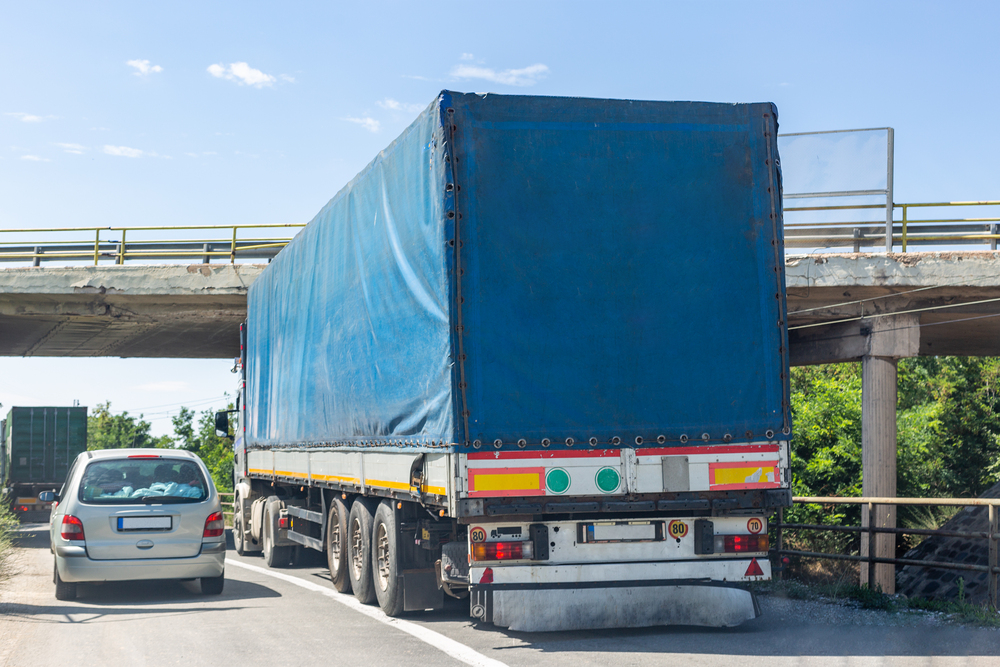
Truck accidents often involve multiple parties, and there are federal rules that apply to trucks that make things a lot more complicated than with typical passenger car accidents. All this means it can be hard to pin down fault, and a truck accident attorney with experience here in North Carolina may be needed if you want to be sure of getting the full compensation you’re owed after a crash.
Read the rest of this entry »
If you’ve been in a slip-and-fall and been injured, and if you slipped because of the negligence of someone else, you should definitely talk with a personal injury attorney here in North Carolina. This really always holds true but there are some situations where it’s especially important to get legal help.
Read the rest of this entry »
After a car wreck, you have the right to bring a claim to recover whatever losses you’ve experienced as a result of that wreck, so long as you bear no fault for the accident. A North Carolina car accident attorney can help you calculate all the types of compensation you can claim for and go to bat for you against the insurance company to make sure your settlement is fair.

Truck accidents tend to cause especially catastrophic injuries and property damage. If you’ve been in a truck accident, it’s important that you prove negligence to get the full compensation you’re owed and get your life back on track. Talk to a truck accident lawyer in North Carolina quickly so they can get started on a strong case for you and protect your case from getting lost in the shuffle.

Boating in North Carolina is usually safe, and not many boating accidents result in deaths. However, when one does, a North Carolina wrongful death lawyer can help the loved ones of the deceased file a wrongful death lawsuit. North Carolina has some specific rules, however, about who may bring such a claim.
Who Can File a Lawsuit After a Fatal Boating Accident in North Carolina?
In many states, relatives of the deceased are permitted to bring wrongful death lawsuits, but here in NC, only the personal representative of the deceased is permitted to bring a wrongful death lawsuit. This is typically the executor or administrator of the deceased’s estate. If the deceased died without a will and there is no executor, then family can petition the court to appoint an executor who will take over this responsibility.
Read the rest of this entry »
If you suffer a serious injury on a construction site in North Carolina, you must act quickly and carefully. Your response in the minutes, hours, and days after the incident can directly affect your ability to recover compensation and receive the medical care you need. A construction accident attorney is legally trained to guide workers and their families through the legal and procedural steps required after a construction injury, helping you avoid any mistakes or delays that could harm your case.
Read the rest of this entry »Will I Have to Go to Court for My Car Accident Case?

If you’ve recently been involved in a car accident in Wilmington, you may be wondering if your case will end up in court. For many North Carolinians, this is a stressful and confusing prospect. Navigating car accidents in North Carolina can feel overwhelming, especially if you’re dealing with injuries, insurance companies, propertly losses, or mounting expenses.
Read the rest of this entry »
Workplace injuries are never planned, and they can happen even when you are doing your best to stay safe. But what happens if you cause the injury yourself? Is workers’ compensation available to you in North Carolina if the injury was your fault?
Read the rest of this entry »
Being involved in a personal injury accident can be a stressful and overwhelming experience, especially when medical bills begin to pile up while you wait for your claim settlement. In Wilmington, NC, and surrounding areas like Clinton, Supply, Jacksonville, Wallace, and Whiteville, many people find themselves in this difficult situation while undergoing treatment after an accident.
Read the rest of this entry »
Getting into a car accident is stressful enough, but when the driver at fault is drunk and doesn’t have insurance, it can feel like a nightmare. In North Carolina, navigating the complexities of drunk driving laws and insurance issues can be overwhelming for accident victims. Understanding your rights and the legal avenues available to you is crucial for getting the compensation you deserve. In this post, we will break down North Carolina’s drunk driving laws, explain how they affect victims hit by uninsured drunk drivers, and provide actionable advice for moving forward.
Read the rest of this entry »Connect with us


- January 2026
- December 2025
- November 2025
- October 2025
- September 2025
- August 2025
- July 2025
- October 2024
- August 2024
- May 2024
- March 2024
- February 2024
- July 2023
- May 2023
- January 2022
- December 2021
- November 2021
- October 2021
- September 2021
- August 2021
- July 2021
- May 2021
- April 2021
- February 2021
- January 2021
- December 2020
- October 2020
- September 2020
- August 2020
- July 2020
- May 2020
- April 2020
- March 2020
- February 2020
- January 2020
- December 2019
- November 2019
- October 2019
- September 2019
- August 2019
- July 2019
- June 2019
- May 2019
- April 2019
- March 2019
- February 2019
- January 2019
Archives

Whiteville Office
403 North J. K. Powell Boulevard
Whiteville, NC 28472